








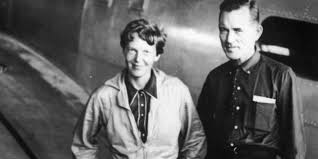
On July 2, 1937, pioneering aviator Amelia Earhart and her navigator, Fred Noonan, vanished over the central Pacific Ocean during an ambitious attempt to fly around the world. Their disappearance remains one of the most enduring mysteries in aviation history, capturing global attention for nearly nine decades.
Earhart, already celebrated as the first woman to fly solo across the Atlantic Ocean, embarked on her round-the-world journey in June 1937. The route, spanning approximately 29,000 miles, was planned near the equator and intended to showcase advancements in aviation while inspiring women worldwide. Accompanying her was Noonan, an experienced navigator with extensive knowledge of Pacific air routes.
The pair departed Lae, New Guinea, on July 2, heading toward Howland Island, a tiny coral atoll in the Pacific that would serve as a refueling stop. The leg of the journey covered roughly 2,556 miles and required precise navigation across open ocean. Communication logs indicate that Earhart transmitted several radio messages during the flight, reporting cloudy conditions and difficulty locating Howland Island.
The U.S. Coast Guard cutter Itasca, stationed near Howland Island to assist with navigation, received some of Earhart’s transmissions but was unable to establish clear two-way communication. Her final reported message suggested that the aircraft was running low on fuel and flying along a navigational line in search of the island. Shortly thereafter, all contact was lost.
An extensive search operation followed, led by the U.S. Navy and Coast Guard. Covering approximately 250,000 square miles of ocean, it was the largest and most expensive search in U.S. history at that time. Despite significant efforts, no confirmed trace of Earhart, Noonan, or their Lockheed Electra aircraft was found.
Over the decades, numerous theories have emerged regarding what happened. The most widely accepted explanation is that the aircraft ran out of fuel and ditched into the ocean. Other hypotheses suggest the possibility of an emergency landing on a remote island, though definitive evidence has never been established.
Amelia Earhart’s legacy extends far beyond the mystery of her disappearance. She broke barriers in aviation, championed women’s rights, and became a symbol of courage and determination. Fred Noonan’s expertise and role in early air navigation also remain an important part of aviation history.
Though their final moments remain unknown, the story of July 2, 1937, continues to inspire exploration, research, and admiration worldwide.